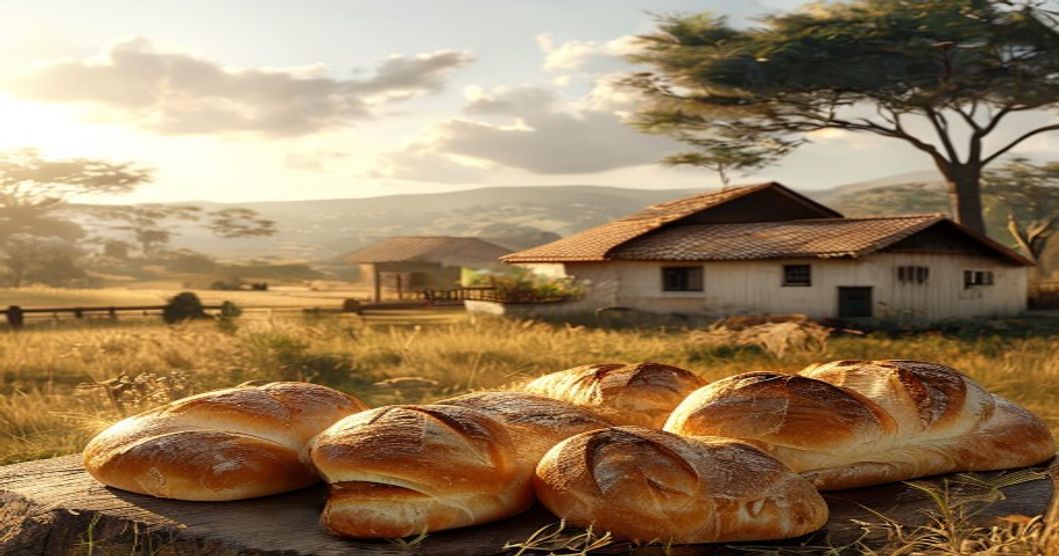
A sourdough starter is a live culture of wild yeast and bacteria captured from your own environment. Once established it lasts indefinitely — passed down through generations. No packets of yeast, no shop dependency. The Hutchi Homestead has been running their starter for years and bakes at least one loaf a day.
Why sourdough over regular bread?
- No artificial additives or preservatives
- Natural fermentation breaks down gluten — far easier on the gut
- Lower glycemic index than commercial bread
- Costs under R20 a loaf once your starter is running
- A healthy starter lasts indefinitely and can be passed down through generations
What you need
- A clean sanitised mason jar
- Cheesecloth or a clean napkin + rubber band
- Bread flour — Eureka Mills works very well (preservative-free)
- Filtered lukewarm water
Day 1 — The beginning
Combine 100g bread flour + 100g filtered lukewarm water in a clean jar. Stir until no dry flour remains — paste consistency. Cover loosely with cheesecloth, leave at room temperature 24 hours.
Day 2 — First feeding
Keep 20g of the starter, discard the rest. Add 100g flour + 100g water to the 20g. Mix well. Cover and rest another 24 hours.
Days 3–5 — Building strength
Repeat the feeding daily: keep 20g, discard rest, add 100g flour + 100g water. From day 3 you should see bubbles and smell a pleasant tang — that's fermentation working. If it doubles within 4–6 hours of feeding, it's becoming active.
Days 6–7 — Ready to use
Your starter should be bubbly with a sour aroma. Float test: drop a spoonful into water — if it floats, it's ready to bake with.
Maintaining your starter
- If baking daily: keep on the counter and feed daily
- If baking weekly: store in the fridge and feed once a week
- Always bring to room temperature and feed before baking
- Best kept next to the stove where it's consistently warm (21–25°C)